Table Of Content
Died two days after receiving the news he was to be released. Originator of the claim of the House of York to the throne. Unfortunately, they are surrounded by the misty, swampy lands of generic medievalness. There was, however, the feeling that the Americans might like it better.
Spring into the world of native plants at the L.A. Times Plants booth at Festival of Books

This war continued even after the death of Edward I. Subsequently Edward I was involved in a war with France. Following the death of Richard I, John ascended the throne as the King of England. His rule witnessed the House of Plantagenets lose much of their lands in France. Additionally, his defeat to the King of France Philip II resulted in the collapse of the Angevin Dynasty. Moreover, the various failures during his reign earned him the nickname ‘John Lackland’. Henry’s son Richard I succeeded the throne following his death.
The Mighty—and Overlooked—Reign of the Plantagenets - The Daily Beast
The Mighty—and Overlooked—Reign of the Plantagenets.
Posted: Wed, 06 Feb 2013 08:00:00 GMT [source]
Descendants of Edward I of England
The Black Death contribued to changes in the way that society ws structured. It triggered events that, along with Poll Taxes, caused the Peasants Revolt. By the end, there was a system of government that gave the nobles more of an input and, in theory, checked the excesses of monarchs.
Angevin Dynasty
He was unfit to rule and England saw a collapse of law and order during his reign. Additionally, there were many military disasters during his reign. The royal house held the English throne from 1154 to 1485.
The resulting stability allowed for the English Renaissance and the advent of early modern Britain and while the Plantagenets died out nearly every English monarch from Henry VII till the present since have been their descendants. After Edward’s death, Richard, Duke of Gloucester, shunted aside his nephew who could rightfully claim the throne as Edward V, and gained the ire of many Yorkists when he was crowned King Richard III. Disaffected Yorkists, previously defeated Lancastrians, and French allies threw their support to Henry Tudor, who defeated Richard III at the Battle of Bosworth Field in 1485 and was proclaimed King Henry VII.
Tudor succession
The usual forms of address for a king for much of the Plantagenet era were ‘your highness’ and ‘your Grace’. Richard, however, had a grander and more elaborate vision of kingship than many of his predecessors, and he introduced the terms ‘your majesty’ and ‘your high majesty’ to the court vocabulary. In 1485 Henry Tudor killed Richard at the Battle of Bosworth and became Henry VII—the first of the Tudor line. He is usually depicted as a brave, warrior king, and was given the nickname 'Lionheart'.
Overview of Plantagenet arms
A distinct national identity was shaped by their conflict with the French, Scots, Welsh and Irish, as well as by the establishment of Middle English as the primary language. Nurseryman and conservationist who long ago saw the beauty (literally and metaphorically) of native plants in urban SoCal environments. Established in 1960, the Theodore Payne Foundation is a nonprofit devoted to the understanding, preservation, and horticultural use of California native plants.
Conflict over the crown
Richard's childless older brother Edward was killed at the Battle of Agincourt later the same year. Both houses asserted rights to the throne due to their descent from King Edward III, and the resulting sporadic Wars of the Roses lasted more than 30 years. The wars are named in reference to the symbols of the rival houses, the White Rose of the Yorkists and the red rose of the Lancastrians. The first battle at St. Albans resulted in a Yorkist victory and actually shocked both sides. Efforts to restore order resulted in four years of uneasy peace; however, the seesaw conflict resumed in 1459, and both sides claimed victories on the battlefield. He left his two young sons—including Edward V—in the care of his brother Richard.
The following year, Henry married Elizabeth, daughter of Edward IV, uniting York and Lancaster and establishing the House of Tudor, which ruled England until 1603. Edward III’s numerous children and their marriages greatly affected English history. Edward’s heir, the “Black Prince,” left an only son, who succeeded his grandfather as Richard II, on whose death (1399) this line became extinct. Lionel, the next surviving son of Edward III, left an only child, Philippa, who married the earl of March, in whose heirs was the right to the succession. Edward I of the House of Plantagenet was crowned as king following the death of his father Henry III. During his reign, Edward I spent most of his time making administrative changes and making reforms in the English Common Law.
Being already married, unbeknownst to her father, Joan was in a dangerous predicament. Eventually this wore rather thin, and in 1399 Richard was deposed by his cousin, Henry Bolingbroke, who took the throne as Henry IV and abruptly ended the unbroken succession of Plantagenet kings that had continued since the 12th century. Fourteen kings of England belonged to the royal house of Plantagenet. He ruled for thirty-four years, but spent only fourteen of them in England. Although well established, the surname Plantagenet has little historical justification. It was not, however, a hereditary surname, and Geoffrey’s descendants in England remained without one for more than 250 years, although surnames became universal outside the royal family.
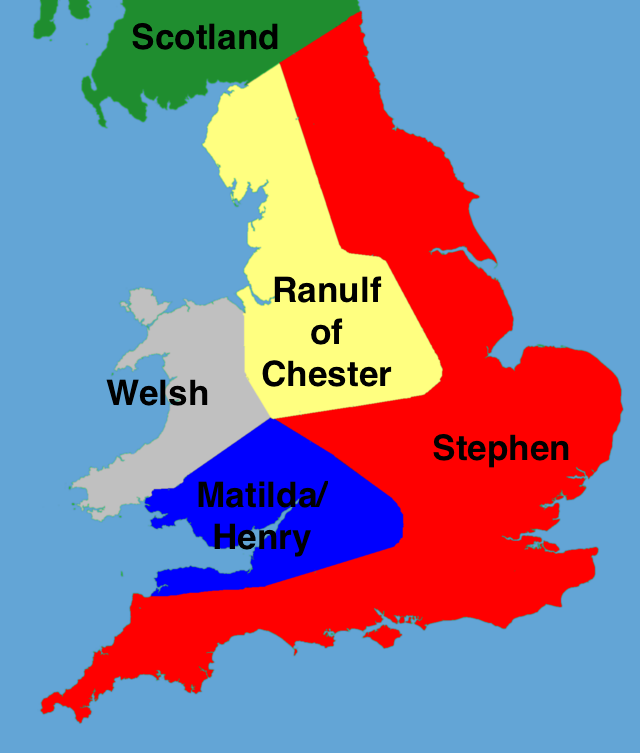
His accession was te result of agreements that brought to an end the civil war between Stephen and Henry’s mother, Matilda. His reign was marked by the murder of Thomas Becket and feuds between himself and his sons, Richard and John. The house of Plantagenet ruled England from the accession of Henry II in 1154 to the death of Richard III at the Battle of Bosworth Field in 1485. The Plantagenet dynasty ruled England for longer than any other house. Government saw many changes and many of the checks and balances that exist today originate from the Plantagenet era.
Henry VI of England granted differenced versions of the Plantagenet arms to his maternal half-brothers. This was an extraordinary grant, since they were not descended from the English royal family. Mary McNamara is a culture columnist and critic for the Los Angeles Times. Previously she was assistant managing editor for arts and entertainment following a 12-year stint as television critic and senior culture editor. A Pulitzer Prize winner in 2015 and finalist for criticism in 2013 and 2014, she has won various awards for criticism and feature writing. She is the author of the Hollywood mysteries “Oscar Season” and “The Starlet.” She lives in La Crescenta with her husband, three children and two dogs.


No comments:
Post a Comment